Why Americans Move to Mexico — What the Headlines Miss and What 2 Million People Already Know
Last Verified: April 2026
More Americans live in Mexico than anywhere else on earth. The estimate sits above two million, not counting seasonal residents, not counting the people who moved and stopped answering surveys about it. That number predates the tariff disputes, the immigration arguments, the current political temperature between the two countries. It isn't reversing. People who looked at the full picture made a decision and mostly stayed.
The gap between what Americans think about Mexico and what Americans living there actually experience is wide -- maybe the widest in expat geography. The US media frame (drug cartels, border politics, crime statistics) isn't invented. It's also not the complete picture. So here's an attempt at the rest of it: the safety question handled plainly, cost of living with actual numbers, healthcare with honest caveats, and the cities worth understanding before you make any decisions.
The Political Noise and the Ground Truth
The US-Mexico relationship has carried political weight for decades. The tariff escalation that intensified in 2025 added another layer: trade tension between two countries sharing the longest commercial border in the world, with supply chains so intertwined that economists on both sides spent considerable time explaining that neither country benefits from the disruption. The immigration debate has been a fixture of American political life long enough that most Mexicans have developed a practiced ability to separate the argument from the people.
Americans who live in Mexico describe the same baseline warmth that characterized the country before the current political climate. The occasional frank conversation about US policy included, handled with the mutual exhaustion that tends to define how people on both sides talk about things neither of them controls.
What the current moment has done is sharpen the question for Americans who were already curious. Mexico has always offered what it offers. Some people needed the contrast to notice it, and a few of them are now looking seriously for the first time.
The Safety Question — Addressed Plainly
The US State Department issues travel advisories for Mexican states, not for Mexico as a single entity. As of 2026, states including Tamaulipas, Colima, Guerrero, and Michoacán carry Do Not Travel (Level 4) designations (the same level as active conflict zones). Read those before you plan anything.
The states where most American expats actually live tell a different story. Yucatán carries a Level 1 designation: Exercise Normal Precautions. Oaxaca, Jalisco (home to Guadalajara and Puerto Vallarta), Guanajuato (San Miguel de Allende), and Mexico City all sit at Level 2: the same "Exercise Increased Caution" advisory applied to roughly sixty countries worldwide, including France and Germany (US State Department, 2026).
Applying "Mexico is dangerous" uniformly to a country larger than Western Europe is the same analytical error as calling the United States dangerous because of homicide statistics in a specific city. The border-region headlines and the lived experience in Oaxaca's Jalatlaco neighborhood or Mexico City's Condesa don't describe the same reality. Read the geography before you make the call.
What expats actually describe isn't different from any major city: stay aware, use reputable transport, know which neighborhoods are which. The Americans who move to Mexico and spend three years telling you it's safer than they expected aren't naive. They did the research first.
Cost of Living: Where the Math Actually Changes
Mexico is the clearest cost-of-living arbitrage available to Americans who want to stay in the Western Hemisphere. A furnished two-bedroom in Mexico City's Condesa or Roma runs USD $900-1,400 per month (Numbeo, Q1 2026). In Mérida or Oaxaca, the same quality of space runs $600-900. These aren't rural outlier numbers - these are established expat neighborhoods with reliable infrastructure, international grocery options, and English-speaking professional services nearby.
Groceries at local markets run 40-60% below US equivalent costs. A weeknight restaurant meal with drinks runs $12-25 per person in most expat cities. Utilities in a two-bedroom run $80-150 per month depending on climate control needs, and the Yucatán peninsula is honest about what that means.
For a retired couple on a combined Social Security income of $3,500-4,000 per month, Mexico isn't a compromise. The income that was a constant source of calculation anxiety in a US city becomes something closer to genuinely comfortable in Mérida or San Miguel. That's a different life. Not a lesser one.
Healthcare: Better Than You Were Told
Private healthcare in Mexico's major cities is good actually good, not "good for a developing country" good. That surprises people who've absorbed the general assumption that non-US healthcare is automatically a downgrade, but it's accurate. Private hospitals in Mexico City, Guadalajara, and Monterrey are JCIA-accredited, staffed by physicians trained at Mexican and international institutions, and priced in a way that makes American healthcare economics look like a different planet.
A specialist consultation costs $40-80. Dental cleaning with X-rays: $30-50. An MRI without insurance: $150-300. Cash prices, not insurance-negotiated rates. Many expats carry private international health insurance. A comprehensive plan costs $100-200 per month for someone in their 40s or 50s, and rarely use it because out-of-pocket costs are low enough to absorb directly.
Legal residents can also enroll in IMSS, Mexico's public health system, as voluntary contributors. Enrollment costs roughly $300-500 per year. Quality varies by location and specialty. Most long-term expats treat IMSS as a backstop and rely on private care for anything routine or specialized. That combination still costs less per year than a single month of US employer-sponsored premiums for many American households.
The Residency Path: More Accessible Than Most People Expect
Mexico's residency system runs on income thresholds, not points or lotteries. The Temporary Resident Visa requires proof of monthly income above a set amount, updated annually by Mexico's Instituto Nacional de Migración. As of 2026, the threshold sits at roughly $1,600-2,000 per month in provable income. Pensions, Social Security, investment income, and employment all qualify. The process starts at the Mexican consulate nearest you -- you apply for the initial visa in the US, not after you land.
Temporary residency is valid for one year and renewable for up to four years. After four years of continuous temporary residency, you qualify for Permanent Residency: the right to live and work in Mexico indefinitely, with no ongoing income requirement. Applicants meeting a higher asset or income threshold can apply for permanent residency directly. Most people use the four-year path.
One practical note: Mexico doesn't have a purpose-built remote work visa. Most remote workers enter on tourist status -- valid up to 180 days -- while navigating the residency process. This is the standard approach, not a legal gray area. It's just how the sequence runs. Verify current thresholds with an immigration attorney in Mexico, since figures are updated annually (INM, 2026).
The Cities Worth Understanding Before You Decide
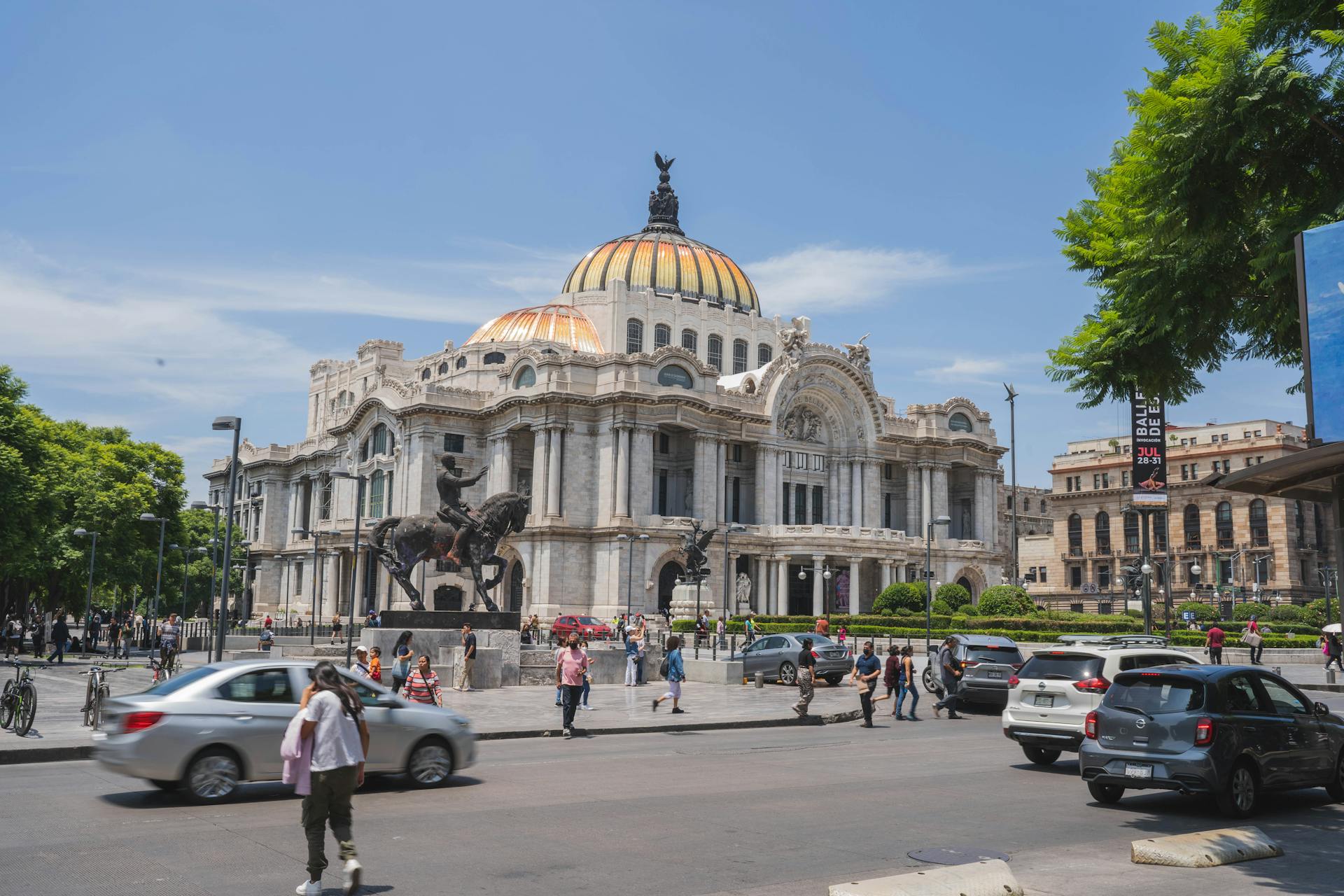
Mexico City (CDMX) gets dismissed more than it should. Twenty-two million people, an arts scene that competes with any city in the Americas, a food culture that's been called one of the best on the planet by people who've eaten their way through most of it. Neighborhoods like Roma and Condesa deliver walkability and urban texture at a fraction of what Barcelona or Buenos Aires would cost. The altitude -- 2,240 meters, roughly 7,350 feet -- takes real adjustment. The rest of it tends to convert people faster than they expect.
Oaxaca is the one that keeps surprising people. A colonial city of about 300,000 with one of the most recognized food traditions in Mexico, a serious arts and craft culture, a growing but not yet overwhelmed expat community, and cost of living well below the CDMX baseline. It isn't for people who need a Costco. It's for people ready to find out what they were actually looking for.
San Miguel de Allende has the largest proportional American expat presence in Mexico -- a colonial hill town in Guanajuato state that has attracted artists and retirees for decades. Beautiful, comfortable, and expensive by Mexican standards. Think of it as the Santa Fe of Mexico: charming, culturally rich, and priced for people who already know they want to be there.
Mérida deserves more attention than it gets. Capital of Yucatán, Level 1 travel advisory, colonial architecture, a food culture built around an entirely different ingredient base from the rest of the country (achiote, habanero, citrus), and cost of living that still runs well below the more famous options. It is genuinely, relentlessly, year-round hot. No seasonal reprieve. People who move there know this going in and stop finding it worth mentioning after about six months.
Puerto Vallarta and the Riviera Nayarit coast offer the beach-first version of Mexico expat life. Established infrastructure, international airport, English-speaking services throughout, a Pacific climate that delivers what the photos promise. More expensive than the interior cities, and most people who want that tradeoff find it worth making.
Who Mexico Actually Works For
The short answer: people who've looked at the actual data rather than the headlines. Beyond that, the fit tends to be pretty specific.
Remote workers get the best of both worlds -- maximum cost savings without leaving the hemisphere. Two-hour flights to Texas, US-aligned time zones, and a US salary that restructures your entire financial picture in ways that Portugal or Thailand require a transatlantic flight to begin to approximate.
Retirees on fixed incomes get something harder to quantify. Social Security that felt like a countdown clock in a US city feels like room to breathe in Mérida or Oaxaca. Not a downgrade; for most people who make the move, the opposite.
Families willing to do the school research often end up surprised. Private bilingual schools in Mexico City and Guadalajara run $300-800 per month -- less than many American daycare bills -- for a bilingual education in an international environment. The children of American expats who grow up in Mexico speak Spanish. That's not a footnote. That's a different set of life options.
Mexico doesn't work for people who've decided the media frame is the whole story and aren't prepared to test that against actual data. And it doesn't work for people unwilling to function in Spanish -- not as a tourist convenience, but as a condition of full participation in the life they moved there for. You don't need to be fluent to move. You do need to be committed to getting there. There's a difference, and it's worth knowing before you start packing.
Table of Contents
The Political Noise and the Ground Truth
TL;DR
- Over 2 million Americans already live in Mexico — more than any other country — and that number predates and has survived the current political climate.
- State Department travel advisories are by state, not country — Yucatán is Level 1; most expat cities sit at Level 2, the same as France and Germany.
- A furnished two-bedroom in Mérida or Oaxaca runs USD $600–900/month; Mexico City's Roma and Condesa neighborhoods run $900–1,400/month.
- Private healthcare is affordable and high-quality in major cities — specialist visits run USD $40–80 out of pocket, and IMSS voluntary enrollment costs USD $300–500/year.
- Temporary residency requires roughly USD $1,600–2,000/month in provable income; permanent residency follows after four years.
- Best fit: remote workers wanting US proximity and time zone alignment, retirees on Social Security, and families looking for bilingual private school at a fraction of US private school costs.
Summary
Mexico is the most popular American expat destination on the planet, and it earned that position through cost, proximity, healthcare access, and a quality of life that the US media frame consistently undersells. The safety concerns are real in specific states and require honest geographic reading — not dismissal and not blanket acceptance. For remote workers, retirees, and families willing to do the research, the math is unambiguous: Mexico offers more per dollar, closer to home, than almost any alternative on earth.
Sources
- Numbeo — Cost of Living in Mexico, Q1 2026 — numbeo.com
- US State Department — Mexico Travel Advisory, 2026 — travel.state.gov
- Instituto Nacional de Migración — Temporary and Permanent Resident Visas, 2026 — gob.mx/inm
- Instituto Mexicano del Seguro Social — Voluntary IMSS Enrollment, 2026 — imss.gob.mx
- US Embassy Mexico City — Americans Living in Mexico, 2026 — mx.usembassy.gov